
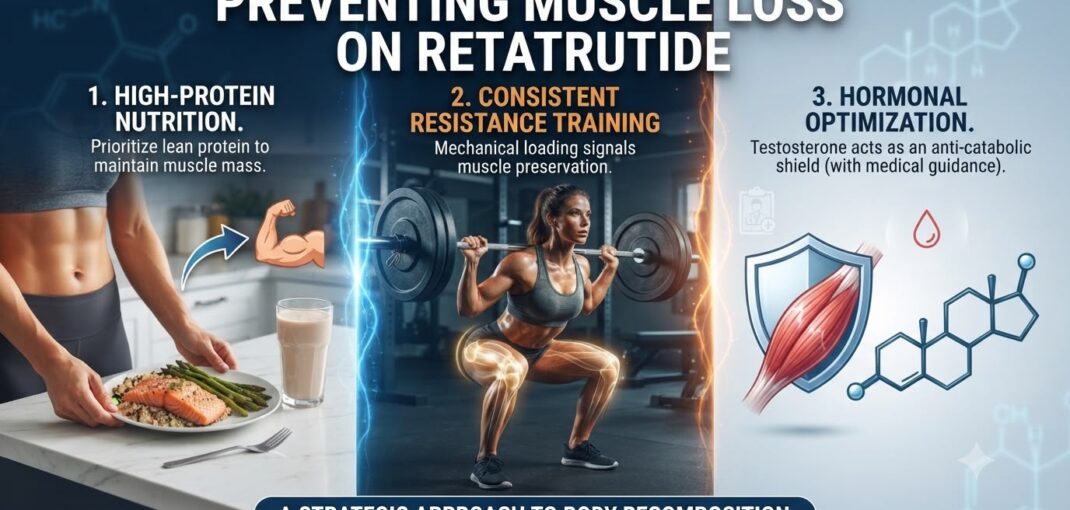
How to Reduce Reta Muscle Loss
How to prevent muscle loss during Reta weight loss cycle is an important question for people who want to reduce body weight while preserving as much lean muscle as possible. Retatrutide, often referred to as Reta, is an investigational medicine being studied for its potential effects on body weight, appetite and metabolic health.
Weight loss does not always mean losing body fat alone. During a calorie deficit, changes in body weight can also involve water, glycogen and lean tissue. For this reason, maintaining muscle should be an important consideration for anyone following a structured weight-loss plan.
Retatrutide has attracted considerable scientific interest because it acts on three metabolic pathways involving GLP-1, GIP and glucagon receptors. Clinical trials have investigated its potential for weight management, but it remains an investigational medicine and should not be treated as a general-purpose solution for muscle preservation.
The most effective approach is to combine appropriate nutrition, resistance training, sufficient recovery and sensible weight-loss goals. These fundamentals can help create better conditions for maintaining strength and lean tissue while body weight decreases.
Why Muscle Preservation Matters During Weight Loss
When body weight decreases, not every kilogram lost represents body fat. Some changes may come from water and glycogen, while a portion can come from lean tissue.
Preserving lean muscle can help support physical strength, training performance and functional capacity. It can also contribute to a more favourable body composition as overall body fat decreases.
This is why how to prevent muscle loss during Reta weight loss cycle should be viewed as a complete nutrition and training strategy rather than something that depends on a single peptide, supplement or medication.
1. Prioritise Resistance Training
Resistance training is one of the most important lifestyle strategies for maintaining muscle during a calorie deficit.
When muscles are regularly exposed to resistance, the body receives a physiological signal that maintaining muscle tissue remains important. This training stimulus can help support muscle protein synthesis and strength retention during weight loss.
Focus on Progressive Resistance
A weight-loss phase is not necessarily the time to completely change your training programme. Instead, aim to maintain a consistent resistance-training routine and preserve as much strength and training quality as reasonably possible.
- Use compound movements appropriate for your experience level.
- Train major muscle groups consistently.
- Maintain good exercise technique.
- Avoid dramatically increasing training volume while calories are reduced.
- Monitor changes in strength and recovery.
Exercises such as squats, presses, rows, deadlift variations and pull-downs can form part of a balanced resistance-training programme when performed safely and appropriately.
2. Get Enough Protein
Protein provides amino acids required for normal muscle maintenance and repair. During weight loss, adequate protein becomes particularly important because energy intake is intentionally lower.
If appetite is reduced, large meals may become difficult to manage. In that situation, smaller protein-rich meals can make it easier to meet nutritional needs without relying on very large portions.
High-Protein Food Choices
- Chicken and turkey
- Lean beef
- Fish and seafood
- Eggs
- Greek yoghurt
- Cottage cheese
- Milk and other dairy products
- Whey or other protein supplements where appropriate
The appropriate amount of protein varies according to body size, age, activity level, overall diet and individual circumstances. Rather than following an unnecessarily aggressive target, consider discussing your nutritional requirements with a qualified healthcare or nutrition professional.
3. Avoid an Excessively Aggressive Calorie Deficit
Rapid weight loss can make it more difficult to maintain training performance and adequate nutrition. A very large calorie deficit may also make fatigue, poor recovery and inadequate protein intake more likely.
A sustainable approach generally focuses on gradual progress rather than trying to lose as much weight as possible in the shortest period.
If body weight is falling rapidly and gym performance is declining at the same time, it may be worth reviewing overall calorie intake, protein intake, hydration, sleep and training volume with an appropriate professional.
4. Manage Appetite Without Neglecting Nutrition
One reason appetite management is relevant when discussing Reta is that reduced appetite may make it easier for some people to consume fewer calories. However, eating less does not automatically mean eating adequately.
When appetite is low, prioritise nutrient-dense foods rather than filling the limited food intake with foods that provide little protein or nutritional value.
A Practical Meal Structure
A simple daily structure might include three balanced meals with an optional protein-rich snack depending on individual needs.
- Breakfast: eggs, Greek yoghurt or another protein source with oats and fruit.
- Lunch: lean protein, rice or potatoes and vegetables.
- Dinner: fish, chicken or lean meat with vegetables and a suitable carbohydrate source.
- Optional snack: yoghurt, cottage cheese or a protein shake.
The exact number of meals is less important than meeting overall nutritional requirements in a way that is comfortable and sustainable.
5. Keep Cardio Under Control
Cardiovascular exercise can be useful for general fitness and increasing energy expenditure, but more cardio is not always better during a muscle-preservation phase.
Combining resistance training with an appropriate amount of cardiovascular activity can provide a more balanced approach.
Walking, cycling, swimming and moderate-intensity cardio can all be useful options. The right amount depends on fitness level, calorie intake, recovery capacity and personal goals.
6. Prioritise Sleep and Recovery
Training is only one part of maintaining physical performance. Recovery also matters.
Insufficient sleep can negatively affect energy, exercise performance and appetite regulation. During a weight-loss phase, consistent sleep can therefore be an important part of the overall strategy.
- Maintain a consistent sleep schedule.
- Allow adequate recovery between demanding training sessions.
- Avoid unnecessarily high training volume.
- Pay attention to persistent fatigue or declining performance.
Good recovery habits do not replace appropriate nutrition and training, but they can complement them.
7. Monitor Strength and Body Composition
Body weight alone does not tell the whole story.
Tracking several measurements can provide a better picture of progress, including:
- Body weight trends
- Waist measurement
- Training performance
- Strength levels
- Progress photographs
- Overall energy and recovery
A temporary change in strength does not automatically mean muscle loss. Hydration, glycogen, sleep, food intake and training fatigue can all influence performance.
How to Prevent Muscle Loss During Reta Weight Loss Cycle: A Practical Strategy
Learning how to prevent muscle loss during Reta weight loss cycle is ultimately about combining several fundamentals rather than relying on one intervention.
- Maintain regular resistance training.
- Prioritise adequate protein and nutrient-dense foods.
- Avoid unnecessarily aggressive calorie restriction.
- Use cardio appropriately rather than excessively.
- Stay hydrated and maintain a balanced diet.
- Prioritise consistent sleep and recovery.
- Monitor strength, body weight and other changes over time.
This approach is more sustainable than attempting to compensate for an overly restrictive diet with excessive exercise or unproven supplementation strategies.
What About Testosterone and Other Muscle-Building Drugs?
Testosterone and other anabolic substances are sometimes discussed in bodybuilding communities as methods for preserving muscle during dieting. However, they should not be presented as routine solutions for people using retatrutide or attempting to lose weight.
Prescription testosterone has legitimate medical indications and can carry significant risks when used without appropriate assessment and monitoring. It is therefore important to distinguish medically indicated hormone therapy from performance-enhancing drug use.
Anyone considering prescription medicines or hormone treatment should speak with a qualified healthcare professional rather than attempting to design a drug-based muscle-preservation protocol independently.
Common Mistakes During a Reta Weight-Loss Phase
Eating Too Little
Very low food intake can make it difficult to obtain enough protein, micronutrients and energy to support normal activity and training.
Stopping Resistance Training
Replacing all resistance training with cardio removes an important stimulus for maintaining muscle.
Ignoring Recovery
Training harder while sleeping less and eating substantially less is unlikely to produce better results.
Focusing Only on the Scale
Scale weight can fluctuate because of water, glycogen and other factors. Looking at longer-term trends provides more useful information.
Using Unverified Products
Products obtained from unreliable sources may have uncertain identity, concentration, sterility or quality. Investigational medicines should only be used within appropriate medical and regulatory frameworks.
Frequently Asked Questions
Can resistance training help preserve muscle during weight loss?
Yes. Resistance training provides an important stimulus for maintaining muscle and strength during a calorie deficit.
How important is protein during a Reta weight-loss phase?
Protein is important because it supplies amino acids required for normal muscle maintenance and repair. Individual requirements vary, so nutritional targets should be tailored to the person.
Can cardio cause muscle loss?
Cardio itself does not automatically cause muscle loss. However, excessive exercise combined with inadequate food intake and poor recovery may make maintaining lean tissue more difficult.
Should I stop lifting weights while losing weight?
For most people trying to preserve muscle, continuing an appropriate resistance-training programme is preferable to replacing weight training entirely with cardio.
What if my appetite becomes very low?
If appetite becomes significantly reduced, focus on nutrient-dense foods and smaller meals. Persistent difficulty eating or drinking enough should be discussed with a healthcare professional.
Is Retatrutide approved for general weight-loss use?
Retatrutide is an investigational medicine and its regulatory status may vary by jurisdiction. It should not be treated as an approved general-purpose weight-loss medicine unless and until the relevant regulatory authorities authorise it.
Conclusion
How to prevent muscle loss during Reta weight loss cycle is best answered by looking beyond the medication itself. Maintaining lean muscle during weight loss depends on the interaction between resistance training, adequate protein, sensible calorie control, recovery and overall nutritional quality.
Retatrutide remains an investigational medicine, so anyone considering its use should obtain appropriate medical advice and understand the regulatory status and potential risks involved.
For people focused on body composition, the fundamentals remain consistent: train your muscles, consume adequate nutrition, recover properly and aim for sustainable progress rather than extreme short-term weight loss.


