
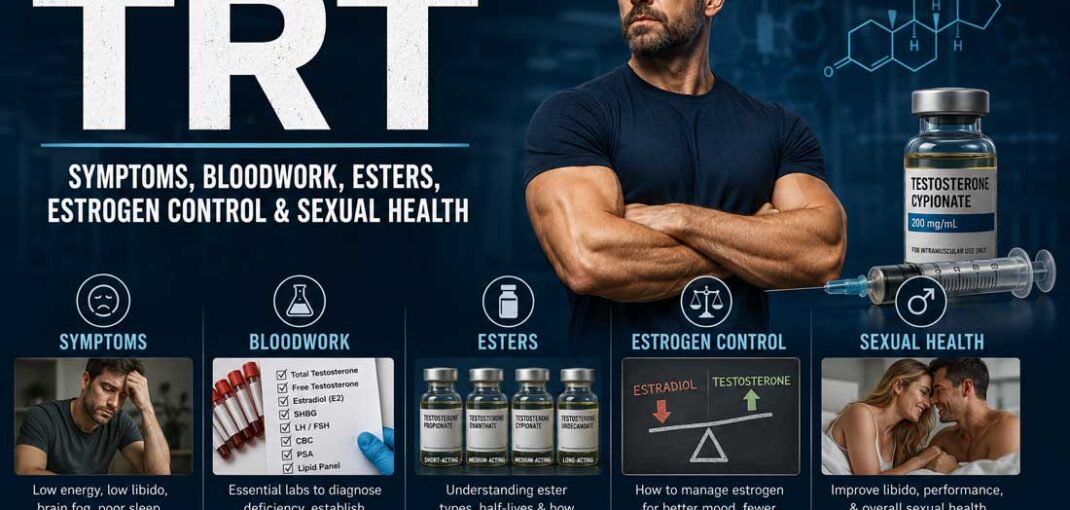
TRT, short for Testosterone Replacement Therapy, is a medical treatment used for men with clinically confirmed testosterone deficiency. Low testosterone can affect sexual health, energy, mood, muscle mass, bone health and overall wellbeing.
However, symptoms alone do not prove that testosterone deficiency is the cause. A proper diagnosis normally combines compatible symptoms with consistently low morning testosterone measurements and an assessment of the underlying cause.
This guide explains low testosterone symptoms, bloodwork, common testosterone esters, estrogen management, fertility considerations, potential benefits and important safety considerations surrounding testosterone replacement.
Table of Contents
- What Is Testosterone Replacement Therapy?
- Who May Need Treatment?
- Symptoms of Low Testosterone
- Blood Tests Before Treatment
- Common Testosterone Esters
- Testosterone Ester Comparison
- Testosterone and Estrogen
- Testosterone Treatment and Fertility
- Potential Benefits
- Monitoring and Safety
- Frequently Asked Questions
What Is Testosterone Replacement Therapy?
Testosterone is an important androgen produced primarily by the testes in adult men. It contributes to sexual function, sperm production, muscle development, bone health and red blood cell production.
Testosterone levels are not constant throughout the day. They can also be influenced by sleep, illness, body weight, medications and other medical conditions. For this reason, a single laboratory result should not automatically lead to treatment.
TRT is intended for men who have an appropriate clinical diagnosis of hypogonadism. The Endocrine Society recommends diagnosing testosterone deficiency when compatible symptoms or signs are present together with consistently low testosterone concentrations.
The objective is to restore testosterone to an appropriate physiological range and improve symptoms while monitoring the patient’s overall health.
Who May Need Testosterone Treatment?
Testosterone replacement may be considered when a healthcare professional confirms hypogonadism and determines that treatment is appropriate. Low testosterone can originate from problems involving the testes, pituitary gland or hypothalamus.
- Primary hypogonadism: The testes cannot produce adequate testosterone despite appropriate hormonal signalling.
- Secondary hypogonadism: The hypothalamus or pituitary gland does not provide sufficient hormonal stimulation to the testes.
- Medical conditions: Certain chronic illnesses, obesity, medications and pituitary disorders can contribute to testosterone deficiency.
- Previous anabolic steroid exposure: Prolonged external androgen use can suppress natural testosterone production and may affect recovery.
Age alone is not a sufficient reason to start TRT. Older men should receive an individualized assessment that considers symptoms, laboratory findings, possible causes and potential treatment risks.
Symptoms of Low Testosterone
Testosterone deficiency can affect sexual, physical and psychological health. However, many of these symptoms are nonspecific and may have other causes.
Sexual Symptoms
- Reduced sexual desire or libido
- Erectile difficulties
- Reduced spontaneous or morning erections
- Reduced fertility or sperm production
Physical Symptoms
- Persistent fatigue or low energy
- Reduced muscle mass and strength
- Increased body fat
- Reduced bone density
- Reduced physical performance
Mental and Emotional Symptoms
- Low mood
- Reduced motivation
- Difficulty concentrating
- Reduced sense of wellbeing
Experiencing several symptoms does not automatically mean that TRT is required. A clinician should investigate other potential explanations before confirming androgen deficiency.
Blood Tests Before Starting Treatment
Blood testing is one of the most important parts of evaluating low testosterone. Testosterone normally varies during the day, so measurements are generally taken in the morning.
Current endocrine guidance recommends confirming a low testosterone result with repeat morning testing before making a diagnosis. Laboratory reference ranges and the patient’s clinical situation should also be considered.
Hormonal Tests
- Total Testosterone: Measures the total amount of testosterone circulating in the blood.
- Free Testosterone: May provide additional information when total testosterone results are borderline or when clinically indicated.
- SHBG: Helps interpret how testosterone is distributed between protein-bound and unbound forms.
- LH and FSH: Help determine whether testosterone deficiency is primarily testicular or related to pituitary or hypothalamic signalling.
- Prolactin: May be tested when secondary hypogonadism or a pituitary disorder is suspected.
- Estradiol: May be assessed when clinically relevant.
General Health Monitoring
Depending on age and medical history, evaluation may also include a complete blood count, hematocrit, blood pressure and prostate-related assessment. These checks help identify potential risks before and during testosterone treatment.
Testosterone can increase red blood cell production, so hematocrit should be monitored during therapy. The appropriate monitoring schedule should be determined by the prescribing clinician.
Common Testosterone Esters
Testosterone can be supplied in several pharmaceutical formulations. Injectable preparations may contain different ester forms, which influence how quickly testosterone is released and how long its effects persist.
Testosterone Cypionate
Testosterone cypionate is a long-acting ester used in some testosterone replacement settings. It has traditionally been widely prescribed in the United States and other markets.
Its longer-acting characteristics mean that the medicine does not behave like a short-acting testosterone formulation. The prescribing schedule should always follow the specific product information and medical advice.
Testosterone Enanthate
Testosterone enanthate is another widely used long-acting ester. It is available in several countries and may be prescribed for testosterone deficiency depending on local licensing and clinical practice.
For information about products available on this website, see Testosterone Enanthate Options.
Sustanon
Sustanon is a combination formulation containing several testosterone esters with different release characteristics. Its availability and prescribing practices vary between countries.
See Sustanon Options for related product information.
Testosterone Phenylpropionate
Testosterone phenylpropionate is a shorter-acting testosterone ester and is less commonly used as a primary long-term replacement option. Its pharmacokinetic profile differs from longer-acting preparations.
See Testosterone Phenylpropionate Options for additional product information.
Testosterone Ester Comparison
| Testosterone Ester | General Duration | Common Clinical Use | Key Characteristic |
|---|---|---|---|
| Cypionate | Long-acting | Testosterone replacement | Extended release |
| Enanthate | Long-acting | Testosterone replacement | Extended release |
| Sustanon | Mixed-duration formulation | Testosterone replacement in selected markets | Multiple esters |
| Phenylpropionate | Shorter-acting | Selected testosterone applications | Shorter release profile |
There is no universally superior testosterone ester. The appropriate formulation depends on the licensed product, availability, patient preference, medical history and the treatment plan established by the prescriber.
Testosterone and Estrogen
Some testosterone is naturally converted into estradiol through an enzyme called aromatase. Estradiol has important physiological functions in men, including roles in bone health and other biological processes.
Therefore, estrogen should not simply be viewed as a hormone that needs to be eliminated. The goal of hormone treatment is to maintain an appropriate physiological balance rather than drive estradiol to extremely low levels.
Can Testosterone Therapy Cause High Estrogen?
Changes in estradiol can occur during testosterone treatment, but symptoms alone cannot reliably establish that estrogen is too high. Breast tenderness, fluid retention, mood changes and sexual symptoms can have multiple possible causes.
For men receiving TRT, estrogen-related concerns should be discussed with the prescribing clinician. Laboratory testing may be appropriate depending on the symptoms and clinical circumstances.
What About Estrogen Blockers?
Aromatase inhibitors and selective estrogen receptor modulators are prescription medicines with specific medical indications and potential adverse effects. They are not automatically required simply because someone is receiving testosterone.
Adding an estrogen-lowering medicine without medical assessment can result in unnecessarily low estradiol and additional side effects. Treatment decisions should therefore be individualized.
Testosterone Treatment and Male Fertility
Fertility is an important consideration before beginning testosterone replacement. External testosterone can suppress LH and FSH signalling, reducing the hormonal stimulation required for normal sperm production.
For this reason, men who are planning fertility in the near future should discuss their plans with a healthcare professional before starting therapy. Testosterone replacement is not considered a fertility treatment.
Men with existing fertility problems or previous anabolic steroid exposure may require a specialist assessment. Semen analysis and hormonal evaluation can provide useful information when fertility is the primary concern.
Do not assume that adding another hormone or fertility medicine to a testosterone regimen will automatically preserve fertility. The appropriate strategy depends on the underlying cause and the individual’s reproductive goals.
Potential Benefits of Testosterone Replacement
When a man has confirmed testosterone deficiency, appropriately supervised replacement therapy may improve symptoms and aspects of quality of life.
- Sexual wellbeing: Treatment may improve sexual desire and some aspects of sexual function in men with genuine testosterone deficiency.
- Energy and wellbeing: Some men experience improvement in fatigue and general wellbeing.
- Body composition: Treatment can support increases in lean body mass and changes in fat mass.
- Bone health: Restoring testosterone in deficient men can support bone mineral density.
- Muscle function: Testosterone plays an important role in maintaining muscle mass and strength.
These potential benefits do not mean that testosterone should be used simply for bodybuilding, athletic performance or general anti-ageing purposes. Treatment is most appropriate when a genuine medical deficiency has been established.
Monitoring Testosterone Treatment Safely
Starting TRT is not the end of the medical evaluation. Follow-up is important for assessing symptom improvement, testosterone levels and potential adverse effects.
- Review testosterone levels using appropriate laboratory testing.
- Monitor symptoms and treatment response.
- Monitor hematocrit and other relevant blood markers.
- Assess blood pressure and cardiovascular risk where appropriate.
- Review prostate health according to age and individual risk.
- Discuss fertility plans before and during treatment.
Patients should also report new or worsening symptoms to their healthcare provider instead of changing the treatment independently.
Testosterone Therapy and Lifestyle Factors
Medical treatment should not replace attention to the factors that influence hormonal health. Sleep quality, healthy body weight, physical activity, balanced nutrition and management of chronic health conditions can all contribute to overall wellbeing.
Some men with low testosterone may have reversible contributing factors. Identifying and addressing these factors can sometimes improve testosterone levels without long-term hormone replacement.
This is why a complete clinical assessment is valuable before committing to long-term testosterone therapy.
Frequently Asked Questions About TRT
What is TRT?
TRT stands for Testosterone Replacement Therapy. It is a medical treatment used to replace testosterone in men with appropriately diagnosed testosterone deficiency.
What are the main symptoms of low testosterone?
Common symptoms include reduced sexual desire, erectile difficulties, low energy, reduced muscle mass, low mood and reduced bone density. Because these symptoms can have many causes, testing and medical assessment are important.
How is testosterone deficiency diagnosed?
Diagnosis generally requires compatible symptoms together with consistently low morning testosterone measurements. An abnormal result is commonly repeated before a diagnosis is confirmed.
What blood tests are used before testosterone replacement?
Testing may include total testosterone and, when appropriate, free testosterone, SHBG, LH, FSH and prolactin. Depending on age and health history, clinicians may also assess hematocrit, blood pressure and prostate-related health.
Can TRT affect fertility?
Yes. External testosterone can suppress the hormonal signals involved in sperm production and may reduce fertility. Men planning to have children should discuss fertility preservation before starting treatment.
Does everyone receiving testosterone need an estrogen blocker?
No. Estrogen-lowering medicines are not automatically required. Estradiol should be considered in the context of symptoms, laboratory findings and the overall clinical picture.
What is the difference between testosterone cypionate and enanthate?
Both are long-acting testosterone esters, but they are chemically different formulations. Their availability, pharmacokinetic properties and prescribing practices vary between countries. The appropriate option should be selected with a healthcare professional.
Is testosterone replacement a lifelong treatment?
Not necessarily in every situation. The duration depends on the underlying cause of testosterone deficiency, treatment response and ongoing clinical assessment. Patients should not assume that therapy must continue indefinitely without regular review.
Final Takeaway
TRT can be an effective treatment for men with confirmed testosterone deficiency, but it should not be considered a general performance-enhancing or anti-ageing therapy.
The most important steps are accurate diagnosis, appropriate bloodwork, identification of the underlying cause, consideration of fertility goals and ongoing medical monitoring.
If you are experiencing symptoms associated with low testosterone, speak with a qualified healthcare professional before starting testosterone treatment or changing an existing prescription. A personalized evaluation can determine whether replacement therapy is appropriate for your health needs.
Trusted Medical Resources
- Endocrine Society – Testosterone Therapy Guideline
- Endocrine Society – Hypogonadism in Men
Medical disclaimer: This article is for educational purposes only and does not replace diagnosis, prescription or individualized medical advice from a qualified healthcare professional.


