
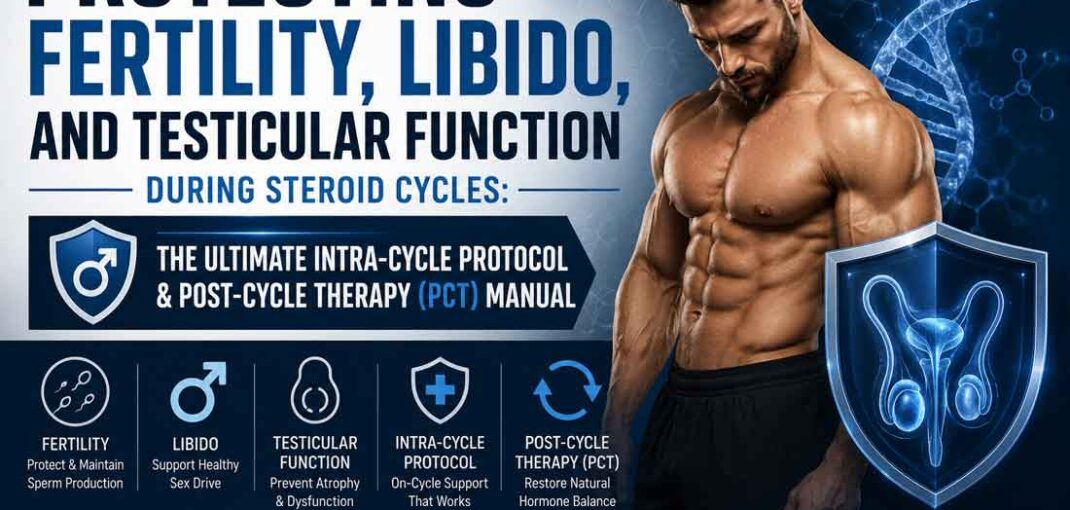
Steroid PCT is a topic that matters to people concerned about fertility, libido, testosterone recovery, and testicular function after anabolic steroid use. Anabolic steroids can suppress the body’s natural hormone production, and recovery may vary significantly between individuals.
This guide explains the medical and hormonal principles behind Steroid PCT, why fertility recovery can take time, and why professional assessment is important. It does not provide a bodybuilding drug cycle, dosing schedule, or self-medication protocol.
Table of Contents
- How Anabolic Steroids Affect Hormonal Function
- Steroid Use and Male Fertility
- What Happens to Libido After Steroid Use?
- Understanding Testicular Function
- What Is Steroid PCT?
- Medicines Sometimes Associated With Recovery
- Why Blood Tests Matter
- How Long Does Recovery Take?
- When Should You See a Doctor?
- Frequently Asked Questions
How Anabolic Steroids Affect Hormonal Function
The male reproductive system is regulated by the hypothalamic-pituitary-gonadal axis, commonly called the HPG axis. The hypothalamus and pituitary gland communicate with the testes through hormonal signals that help regulate testosterone production and sperm development.
When anabolic-androgenic steroids are introduced from outside the body, circulating androgen levels can signal the brain that sufficient androgen is already available. As a result, natural hormonal signalling may be reduced. This can decrease luteinising hormone (LH) and follicle-stimulating hormone (FSH), which are important for normal testicular function.
The result is not simply a temporary change in testosterone. Suppression can also affect sperm production, testicular size, libido and fertility. This is one reason why Steroid PCT should be viewed as a medical recovery issue rather than a standard bodybuilding checklist.
Steroid-Induced Hormonal Suppression
Hormonal suppression varies according to the compounds used, duration of exposure, individual physiology and previous steroid use. Some people recover relatively quickly, while others may experience prolonged hormonal disruption.
Possible consequences can include reduced endogenous testosterone production, reduced sperm production, testicular shrinkage, erectile difficulties and changes in sexual desire. Psychological symptoms such as fatigue, low mood and reduced motivation can also occur during withdrawal and recovery.
For this reason, there is no single Steroid PCT formula that can guarantee the same result for everyone. A person’s symptoms and laboratory results are more informative than a fixed online protocol.
Steroid Use and Male Fertility
Male fertility depends heavily on normal testicular function and adequate hormonal signalling. Anabolic steroid use can reduce sperm production because suppression of LH and FSH interferes with the environment required for spermatogenesis.
Reduced sperm concentration, reduced sperm motility and temporary infertility may occur. Recovery is possible for many men, but the time required can vary considerably.
Research discussed by the Endocrine Society has shown that reproductive recovery after androgen exposure can take months, and in some cases longer. Therefore, anyone whose primary goal is fertility should not rely on a generic Steroid PCT plan instead of appropriate medical and fertility assessment.
A semen analysis can provide important information about sperm concentration, movement and morphology. Hormonal blood tests may also help clinicians understand whether the reproductive axis is recovering.
Why Fertility Recovery Varies
Recovery is influenced by many factors, including previous androgen exposure, the duration of suppression, age, underlying reproductive health and individual hormone regulation.
Two people can stop anabolic steroids at the same time and experience very different recovery patterns. One may regain reproductive function relatively quickly, while another may require prolonged monitoring.
This variability is one of the most important reasons to approach Steroid PCT carefully. Online schedules cannot account for individual laboratory results, fertility goals or underlying medical conditions.
What Happens to Libido After Steroid Use?
Changes in libido are commonly reported during and after anabolic steroid use. While high androgen exposure may initially increase sexual desire in some individuals, hormonal suppression after stopping can produce the opposite effect.
Low libido may occur alongside erectile difficulties, fatigue, low mood or reduced energy. These symptoms can have several possible causes, so they should not automatically be attributed to testosterone alone.
When libido remains low after stopping steroids, medical evaluation can help identify whether persistent hormonal suppression or another health issue may be contributing. A medically supervised Steroid PCT discussion should therefore consider the complete clinical picture.
Understanding Testicular Function
The testes have two major reproductive functions: producing testosterone and producing sperm. Both functions depend on appropriate hormonal communication between the brain and the testes.
External anabolic steroids can reduce this signalling. Over time, reduced stimulation may contribute to testicular shrinkage and impaired sperm production.
Testicular function can improve after androgen exposure ends, but recovery is not necessarily immediate. Persistent symptoms should be evaluated by a qualified healthcare professional rather than treated solely according to an internet-based Steroid PCT schedule.
What Is Steroid PCT?
Steroid PCT, or post-cycle therapy, is a term commonly used in bodybuilding communities to describe attempts to support hormonal recovery after anabolic steroid use.
Some medicines discussed in this context have legitimate medical uses, but that does not mean they are appropriate for unsupervised post-cycle treatment. Their indications, contraindications, interactions and potential adverse effects need to be considered individually.
There is no universally accepted bodybuilding PCT protocol that guarantees restoration of fertility or testosterone production. A responsible approach focuses on medical assessment, symptom monitoring and appropriate laboratory testing.
PCT Is Not a Guaranteed Hormonal Reset
It is important to distinguish between the term Steroid PCT used online and evidence-based medical treatment. Some observational research has reported associations between self-reported PCT and improved reproductive hormone outcomes, but this does not establish a universally safe or effective self-treatment protocol.
People considering treatment should discuss their history with a doctor, particularly if they have persistent sexual symptoms, fertility concerns, significant mood changes or other health problems.
Medicines Sometimes Associated With Recovery
Several prescription medicines are frequently discussed in connection with Steroid PCT. These include human chorionic gonadotropin (hCG), human menopausal gonadotropin or menotropins, clomiphene and tamoxifen.
These medicines have specific medical indications and are not interchangeable. Their use should be based on a clinical assessment rather than a generic bodybuilding protocol.
HCG and Male Reproductive Health
hCG has established medical uses involving certain forms of male hypogonadism and reproductive medicine. It can act through pathways related to LH activity, but this does not mean that everyone stopping anabolic steroids should automatically use hCG.
Medical supervision is particularly important because treatment decisions depend on the individual’s hormone levels, fertility objectives and overall health.
HMG and Sperm Production
Menotropins contain gonadotropins that may be used in specialist fertility treatment. Their role is different from simply trying to increase testosterone, and treatment requires appropriate clinical assessment.
Clomiphene and Tamoxifen
Clomiphene and tamoxifen belong to a group of medicines known as selective oestrogen receptor modulators. They have established medical applications, but using them as part of Steroid PCT without professional guidance can carry risks and may not address the underlying cause of persistent symptoms.
For educational information about these medicines, always refer to qualified medical and regulatory sources rather than relying on online dosing schedules.
Why Blood Tests Matter During Recovery
Symptoms alone cannot reliably determine whether the reproductive hormone system has recovered. Blood testing can help provide a clearer picture of hormonal function.
- Total testosterone
- LH
- FSH
- Estradiol when clinically appropriate
- Prolactin when clinically appropriate
- Other tests recommended by a healthcare professional
For people concerned about fertility, semen analysis may be more informative than testosterone testing alone. This is why a responsible Steroid PCT approach should focus on measurable recovery rather than simply completing a predetermined timetable.
How Long Does Steroid Recovery Take?
There is no universal recovery timeline after anabolic steroid use. Research suggests that some aspects of reproductive recovery may take several months, while sperm production can take longer.
The Endocrine Society has highlighted evidence showing that recovery of reproductive hormones and sperm production can extend well beyond the point when a person feels physically better.
This is an important point for anyone researching Steroid PCT: feeling normal does not necessarily mean that fertility or endocrine function has completely returned to baseline.
When Should You See a Doctor?
Medical advice is especially important if symptoms continue after stopping anabolic steroids. Seek professional evaluation if you experience persistent low libido, erectile difficulties, significant fatigue, fertility problems, testicular changes or substantial changes in mood.
A doctor can review your medical history, previous androgen exposure, symptoms and laboratory results. This is safer and more informative than selecting a Steroid PCT protocol from an online forum.
Can Testosterone Replacement Therapy Preserve Fertility?
Testosterone replacement therapy is sometimes misunderstood as a fertility treatment. In men who are actively trying to conceive, exogenous testosterone can suppress sperm production and is therefore generally not recommended for fertility preservation.
Anyone with fertility goals should discuss those goals with a qualified healthcare professional before starting hormone treatment. Fertility management may require a different clinical approach from treatment of testosterone deficiency.
Frequently Asked Questions About Steroid PCT
What does Steroid PCT mean?
Steroid PCT means post-cycle therapy, a term commonly used for attempts to support hormonal recovery after anabolic steroid use. It is not a single medically standard treatment.
Can steroid use affect fertility?
Yes. Anabolic steroids can suppress reproductive hormone signalling and reduce sperm production. Fertility may recover after stopping, but the timeframe varies between individuals.
Does Steroid PCT guarantee fertility recovery?
No. There is no universal Steroid PCT formula that guarantees fertility or hormonal recovery. Medical assessment and, when appropriate, semen analysis and hormone testing provide a more reliable way to evaluate recovery.
How long can hormonal recovery take?
Recovery can take months and varies considerably. Some reproductive functions may recover before others, and sperm production can require a longer period of time.
Should I use PCT medicines without medical supervision?
No. Medicines associated with PCT have specific indications and potential risks. They should not be used according to an internet schedule without appropriate professional guidance.
Final Takeaway
Steroid PCT is widely discussed online, but hormonal and reproductive recovery after anabolic steroid use is more complicated than following a fixed checklist. Steroids can affect testosterone production, sperm production, libido and testicular function, and recovery may take considerable time.
The safest approach is to focus on evidence-based medical assessment, appropriate blood testing and fertility evaluation when required. Avoid assuming that a standard online protocol will produce the same result for every person.
If fertility, libido or hormonal recovery is a concern, speak with a qualified healthcare professional before using prescription medicines or hormone-related treatments.
Related PCT Resources
Important: Product information on this website is provided for educational purposes. Prescription and hormone-related medicines should only be used according to appropriate professional medical advice.


