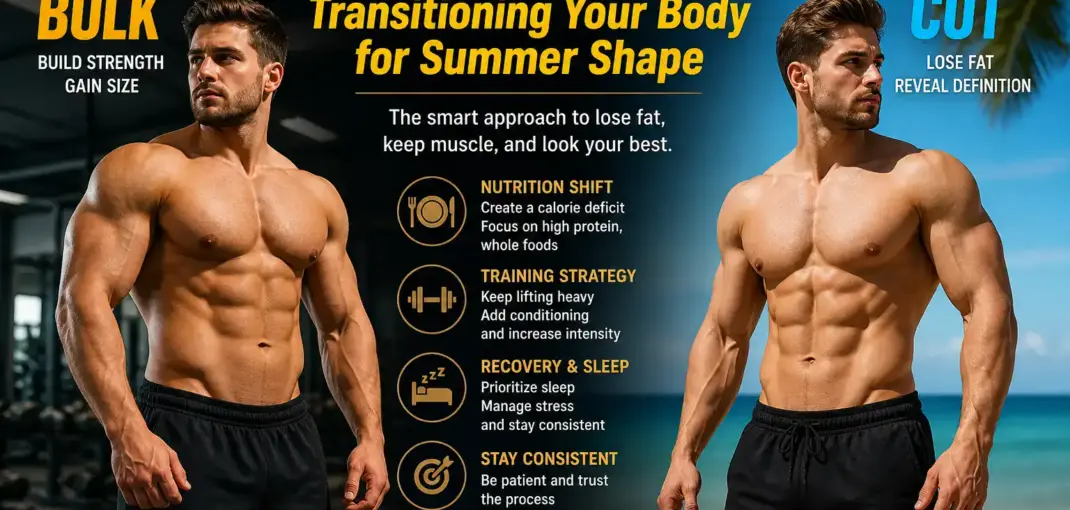
From Bulk to Cut: Transitioning Your Body for Summer Shape
Transitioning from bulk to cut is an important stage in a fitness journey. After months of building muscle and strength, the focus shifts to reducing body fat while preserving as much muscle mass and training performance as possible. A successful transition combines a controlled calorie deficit, adequate protein, consistent resistance training, and sufficient recovery.
This process is not simply about eating less or doing more cardio. A successful cut requires precision, strategy, and consistency. When done correctly, it allows you to achieve a lean, defined, and athletic look—perfect for summer—without sacrificing performance or strength.
Transitioning from bulk to cut is an important stage in a fitness journey. After months of building muscle and strength, the goal shifts toward reducing body fat while preserving as much muscle mass and training performance as possible.
Understanding the Bulk-to-Cut Transition
Bulking is focused on calorie surplus, muscle growth, and progressive overload. Cutting, on the other hand, is about calorie control, fat loss, and muscle preservation.
The biggest mistake people make is transitioning too aggressively.
Common Mistakes:
- Dropping calories too low too quickly
- Increasing cardio excessively
- Reducing training intensity
- Ignoring recovery and sleep
Smart Transition Approach:
- Gradually reduce calories
- Maintain heavy resistance training
- Introduce cardio strategically
- Support recovery and hormonal balance
Step 1: Adjust Your Nutrition (The Foundation)
Nutrition is the single most important factor during your cutting phase.
Create a Controlled Calorie Deficit
Instead of cutting calories drastically, aim for a 300–500 calorie deficit from your maintenance level.
This allows:
- Steady fat loss
- Muscle preservation
- Better energy levels
Protein Intake (Critical for Muscle Retention)
Keep protein intake high:
- 1.8 – 2.5g per kg body weight
Benefits:
- Preserves muscle mass
- Keeps you full
- Supports recovery
Carbohydrates (Fuel & Performance)
Do NOT eliminate carbs.
- Keep carbs around workouts
- Reduce slightly from bulk levels
- Focus on clean sources: rice, potatoes, oats
Fats (Hormonal Support)
Healthy fats are essential:
- 20–30% of total calories
Sources:
- Avocado
- Olive oil
- Nuts
Step 2: Training Strategy During Cutting
One of the biggest myths is that you should train lighter during a cut.
That’s wrong.
Keep Lifting Heavy
Your goal is to signal your body to keep muscle.
- Maintain intensity (same weights if possible)
- Focus on compound movements
- Avoid unnecessary volume drop
Training Focus:
- Strength retention = muscle retention
- Shorter rest times (optional for intensity)
- Maintain progressive overload where possible
Step 3: Cardio – Smart, Not Excessive
Cardio is a tool—not the foundation.
Types of Cardio:
- LISS (Low Intensity Steady State) → walking, incline treadmill
- HIIT (High Intensity) → short bursts, fat burning
Recommended Approach:
- Start with 2–3 sessions per week
- Gradually increase if fat loss slows
- Avoid overdoing it (muscle loss risk)
Step 4: Recovery & Sleep (Highly Underrated)
When calories drop, recovery becomes even more important.
Sleep:
- Minimum 7–8 hours
- Supports fat loss hormones
- Improves performance
Stress Management:
High stress = higher cortisol = harder fat loss
- Stay consistent
- Avoid burnout
- Keep routine structured
Step 5: Supplements and Recovery Support
During a cutting phase, prioritize a sustainable calorie deficit, adequate protein, resistance training, and sufficient sleep before considering additional supplements.
Peptides such as GHK-Cu are discussed in research related to skin biology, but evidence that they improve fat loss, preserve muscle, or enhance recovery during a cutting phase is limited. They should not be presented as proven cutting aids. Focus on established nutrition and training practices, and consult a qualified healthcare professional before using products marketed for performance or recovery.
Step 6: Tracking Progress Properly
Do not rely only on the scale.
Track:
- Mirror progress (visual changes)
- Weekly weight averages
- Strength levels
- Body measurements
Ideal Fat Loss Rate:
- 0.5 – 1% body weight per week
Too fast = muscle loss
Too slow = ineffective
Step 7: Staying Consistent (The Real Secret)
The difference between average and great results is consistency.
Key Principles:
- Stick to your plan
- Avoid constant changes
- Trust the process
Final Results You Can Expect
When done correctly, transitioning from bulk to cut will give you:
- A leaner, sharper physique
- Visible muscle definition
- Maintained strength
- Improved confidence
Frequently Asked Questions (FAQ)
How long should a cutting phase last?
Typically 8–16 weeks, depending on your starting body fat level.
Can I build muscle while cutting?
It’s possible (especially for beginners), but the main goal is fat loss + muscle retention.
Should I train every day during a cut?
No. Recovery is essential.
4–6 training days per week is ideal.
When should I start my cut for summer?
Ideally 10–12 weeks before your target date.
Do I need cardio to lose fat?
Not necessarily—but it helps accelerate results when used correctly.
Conclusion
Transitioning from bulk to cut is where your hard work truly shows. By combining smart nutrition, structured training, controlled cardio, and proper recovery, you can achieve a physique that reflects both discipline and strategy.
Stay patient, stay consistent, and focus on sustainable progress—not shortcuts.