How to Tighten Loose Skin After Weight Loss: 7 Proven Tips
Losing a significant amount of weight is a major achievement, but some people are left with loose or hanging skin around the abdomen, arms, thighs, chest, or other areas. This can be frustrating after months or years of effort, especially when changes in body shape do not match expectations.
If you are wondering how to tighten loose skin after weight loss, it helps to understand that the outcome depends on factors such as age, genetics, the amount of weight lost, skin elasticity, and how long the skin was stretched. Exercise and good nutrition can support your overall body composition and skin health, but they cannot remove large folds of excess skin.
This guide explains practical strategies, what supplements and skin treatments may realistically achieve, and when professional medical advice may help.
Why Does Loose Skin Happen After Weight Loss?
Skin contains structural proteins, including collagen and elastin, that help it maintain strength and flexibility. When the body becomes larger, the skin stretches to accommodate the change. After substantial weight loss, it may not fully return to its previous size.
The likelihood and severity of loose skin can be influenced by:
-
The total amount of weight lost
-
Age and individual skin elasticity
-
How long the skin was stretched
-
Genetics
-
Sun exposure and smoking
-
Changes in muscle mass during weight loss
Loose skin is particularly common after major weight loss, including weight loss following bariatric surgery. It is a normal physical outcome for some people and does not mean that their weight-loss efforts have failed.
For more information about treatment options after major weight loss, see the American Society of Plastic Surgeons’ body-contouring overview.
Can Loose Skin Tighten Naturally?
Some mild skin laxity may improve over time, but the extent of improvement varies. Skin does not always return completely to its former shape, particularly after substantial or long-lasting stretching.
Maintaining a stable weight, eating adequately, and following a resistance-training routine can improve body composition and overall appearance. However, these strategies do not remove excess skin.
There is no universal timeline for natural skin tightening. If your weight has recently changed significantly, discuss realistic expectations with a healthcare professional rather than relying on a fixed deadline. If excess skin causes persistent irritation, rashes, hygiene difficulties, or discomfort, medical assessment may be worthwhile.
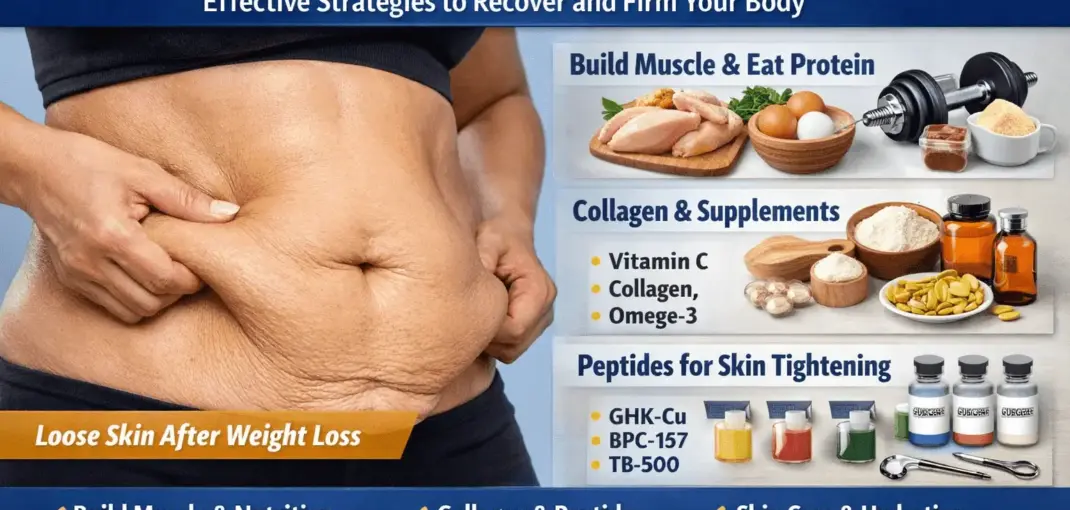
7 Ways to Improve Body Shape and Support Skin Health
1. Build Muscle Through Resistance Training
Resistance training can help build or preserve muscle while improving strength and body composition. Developing the muscles beneath loose skin may improve the overall contour of areas such as the arms, shoulders, chest, glutes, and legs.
However, muscle growth does not shrink or remove excess skin itself. The difference is important: training may improve the shape beneath the skin, but it cannot guarantee that hanging folds will disappear.
Choose a routine appropriate for your experience and physical ability. Increase training demands gradually and allow enough time for recovery.
2. Eat Enough Protein
Protein provides amino acids needed for muscle maintenance, tissue repair, and normal body functions. During weight maintenance or further weight loss, adequate protein intake can help support lean mass, particularly when combined with resistance exercise.
Useful sources include eggs, fish, lean meats, dairy products, beans, lentils, tofu, and other protein-rich foods. Protein powders can be convenient if ordinary meals do not provide enough protein, but they are not essential for everyone.
Your individual protein needs depend on factors such as body size, activity, age, and health. A registered dietitian can help you establish an appropriate target.
3. Maintain a Balanced, Nutrient-Rich Diet
The body needs a range of nutrients to maintain normal skin function and support tissue repair. Vitamin C, zinc, copper, and adequate protein all contribute to normal physiological processes, including collagen formation and wound healing.
Prioritize a varied diet with vegetables, fruit, whole grains, protein sources, and healthy fats. Avoid prolonged crash dieting or unnecessary food restrictions that make it difficult to meet your nutritional needs.
Correcting a nutrient deficiency can support health, but taking extra vitamins or minerals beyond your needs has not been shown to remove excess skin.
4. Stay Hydrated and Moisturize Your Skin
Adequate fluid intake supports normal body function. Moisturizers can also help reduce dryness and make the skin feel smoother and temporarily appear plumper.
These benefits should not be confused with structural skin tightening. Drinking additional water beyond your needs or applying a moisturizer will not remove hanging skin.
Choose a moisturizer suited to your skin type and seek advice if you have persistent irritation, inflammation, or skin-fold rashes.
5. Give Your Body Time to Adjust
After major weight loss, it can take time to understand how your body shape will settle. Maintaining a relatively stable weight may make it easier to assess the amount of excess skin and discuss treatment options if needed.
Avoid repeatedly pursuing aggressive weight-loss phases simply to try to tighten the skin. Further weight loss does not necessarily improve skin laxity and may leave additional loose skin in some circumstances.
If you are still actively losing weight, a healthcare professional can help you decide when it makes sense to reassess your goals.
6. Treat Skin-Care Products Realistically
Retinoid-containing products may improve certain signs of skin aging, while moisturizers can improve dryness and surface texture. However, creams and lotions cannot remove large amounts of excess skin.
The American Academy of Dermatology’s guide to firming sagging skin explains that the results from firming products are generally subtle and that some products may produce little or no visible change.
If you use a retinoid, follow product directions and seek professional advice if you have sensitive skin, a skin condition, or are pregnant or planning pregnancy.
7. Consider Professional Treatments When Appropriate
Some non-surgical procedures, including certain radiofrequency, ultrasound, and laser treatments, may provide modest improvement in selected cases of skin laxity. Results vary depending on the device, the treatment area, skin condition, and amount of excess skin.
These procedures are not equivalent to surgically removing loose skin. Before paying for treatment, consult a qualified dermatologist or appropriately trained medical professional about expected results, risks, costs, and alternatives.
Do Supplements Help Tighten Loose Skin?
Supplements are sometimes marketed as a solution for skin laxity, but the evidence needs careful interpretation. A supplement that affects a measure of skin hydration or elasticity is not necessarily able to reduce large folds of excess skin after major weight loss.
Collagen Peptides
Research on oral collagen supplements has reported mixed results. Some studies suggest possible improvements in measures such as skin hydration or elasticity, but the quality of the evidence varies. A 2025 systematic review and meta-analysis found that results differed according to study quality and industry funding.
You can read the study in The American Journal of Medicine.
Collagen supplements should not be presented as a proven treatment for hanging skin. They are also not a replacement for adequate nutrition or medical assessment when excess skin causes problems.
how to tighten loose skin after weight loss
Vitamin C and Zinc
Vitamin C and zinc contribute to normal physiological functions, including collagen formation and tissue repair. Getting enough of these nutrients is important, but supplementation beyond nutritional requirements has not been established as a way to tighten loose skin.
If you suspect a deficiency or have a restrictive diet, ask a healthcare professional whether testing or supplementation is appropriate.
Hyaluronic Acid and Omega-3 Fatty Acids
Hyaluronic acid is used in some skin-care products to support hydration, while omega-3 fatty acids are important nutrients in the diet. Neither should be considered a proven method for removing excess skin after weight loss.
Choose supplements based on a clear nutritional or medical need, rather than relying on claims that they will produce dramatic changes in skin firmness.
What About Peptides Such as GHK-Cu, BPC-157, and TB-500?
These compounds appear in online discussions about skin quality, tissue repair, and recovery. However, they should not be presented as established treatments for loose skin after weight loss.
Evidence supporting their safety and effectiveness for this purpose is insufficient, and products sold online may have uncertain quality or composition. The U.S. Food and Drug Administration has raised safety concerns about compounded products involving BPC-157 and TB-500-related substances. See the FDA’s information on bulk drug substances that may present significant safety risks.
Do not assume that a compound is safe or effective because it is described as a research peptide or discussed in fitness communities. Consult a qualified healthcare professional before considering experimental or unapproved substances.
When Is Surgery the Most Effective Option?
When there is a substantial amount of hanging skin, surgery may be the most effective way to remove it. Procedures depend on the location of the excess skin and may include:
-
Abdominoplasty (tummy tuck): removes excess skin and may address abdominal muscle separation in selected patients.
-
Arm lift: removes excess skin from the upper arms.
-
Thigh lift: addresses excess skin around the thighs.
-
Body lift: treats larger areas of excess skin around the torso and lower body.
Surgery involves risks, including bleeding, infection, blood clots, scarring, and wound-healing problems. Recovery can also require time away from strenuous activity.
A consultation with a qualified plastic surgeon can help determine whether a procedure is suitable, what results are realistic, and whether weight stability or other health considerations should be addressed first. The American Society of Plastic Surgeons’ body-contouring information provides further details.
Common Mistakes to Avoid
If your goal is to improve your appearance after weight loss, avoid these common misconceptions:
-
Expecting exercise to remove large amounts of excess skin
-
Continuing severe calorie restriction in the hope of tightening skin
-
Assuming supplements can replace medical treatment
-
Expecting creams to lift hanging skin folds
-
Using unapproved peptides based on online testimonials
-
Paying for cosmetic procedures without checking the provider’s qualifications and the evidence
-
Comparing your skin to someone else’s without considering differences in age, genetics, and the amount of weight lost
A realistic plan focuses on health, strength, and informed decisions rather than promises of perfect skin.
Frequently Asked Questions
How long does loose skin take to tighten after weight loss?
There is no single timeline. Some mild laxity may improve over time, but the degree of change depends on individual factors and the amount of excess skin. Significant loose skin may not resolve naturally.
Can building muscle remove loose skin?
No. Resistance training can improve muscle mass and body shape, but it cannot remove excess skin. It may improve the appearance of some areas by developing the underlying muscles.
Do collagen supplements tighten loose skin?
Evidence on collagen supplements and skin measures such as hydration and elasticity is mixed. There is no strong evidence that collagen supplements remove substantial excess skin after weight loss.
Do skin-tightening creams work?
Moisturizers can improve dryness and temporarily make skin look smoother. Some topical ingredients may produce modest changes in skin texture, but creams cannot remove large folds of excess skin.
When should I speak to a doctor?
Seek medical advice if loose skin causes recurring rashes, sores, infections, hygiene difficulties, or pain. You can also consult a dermatologist or plastic surgeon if you want to understand non-surgical and surgical options.
Final Thoughts
Loose skin after significant weight loss is common, and it does not diminish the achievement of improving your health. Resistance training, adequate nutrition, a stable weight, and appropriate skin care can support body composition and skin health, but they cannot guarantee that excess skin will disappear.
Supplements may have limited roles in supporting nutritional needs, while claims about collagen and experimental peptides should be approached cautiously. For substantial hanging skin, a consultation with a qualified medical professional can help you understand whether non-surgical treatment or body-contouring surgery is appropriate.
The most useful approach is to set realistic expectations, protect your health, and choose treatments based on evidence rather than promises.
This article is for educational purposes only and is not a substitute for individualized medical advice.
Suggested internal link: Add a link to your related article about sustainable weight loss, resistance training, or post-weight-loss nutrition.