
Post Cycle Therapy (PCT): The Complete Guide to Recovery After a Steroid Cycle
62 / 100 Powered by Rank Math SEO SEO
Free shipping for purchases over £150
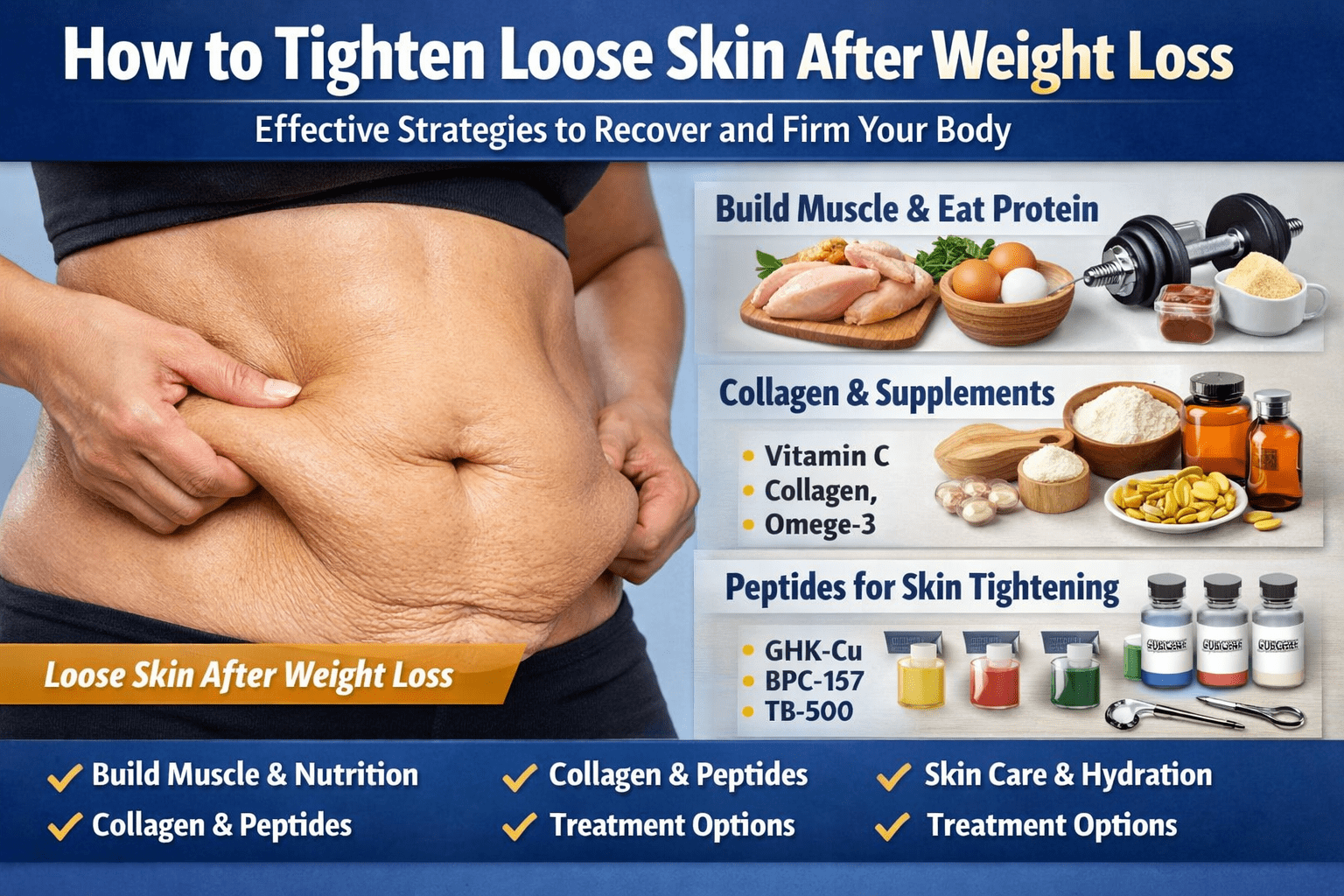
How to Tighten Loose Skin After Weight Loss
Losing a significant amount of weight is a huge achievement, but many people face a frustrating problem afterward: loose skin after weight loss. This often happens when someone loses a lot of body fat, especially from the stomach, arms, thighs, chest, or lower body. The fat goes down, but the skin does not always shrink back fully.
This is especially common in people who had a larger stomach for a long time, lost weight quickly, or went through a dramatic body transformation. As a result, extra skin may remain around the abdomen and other areas, creating a sagging or hanging appearance.
The good news is that there are ways to improve it. While severe excess skin may sometimes require medical procedures, many people can noticeably improve mild to moderate sagging skin after fat loss with the right plan. This includes resistance training, collagen support, better nutrition, hydration, proper skin care, and patience.
In this complete guide, you will learn how to tighten loose skin after weight loss, what causes it, what truly helps, and which supplements or peptides may support better skin quality.
The skin is designed to stretch and adapt, but it has limits. When the body stays overweight for a long time, the skin stretches to cover the increased body size. Over time, the skin’s structural components, especially collagen and elastin, can lose some of their ability to bounce back.
After major fat loss, the body becomes smaller, but the stretched skin may not fully contract. This leaves behind loose or hanging skin, particularly in areas where the body stored the most fat.
The risk is higher when:
In many cases, yes, at least to some degree. Mild loose skin often improves over time, especially when the person is younger, has good skin quality, and did not lose weight too aggressively.
However, the process is slow. Skin can continue adapting for 6 to 24 months after body weight stabilizes. That means many people judge the result too early.
If the skin has been heavily stretched for years or the weight loss was extreme, natural tightening may be limited. Even then, the appearance can still improve with a good recovery plan.
One of the most effective natural strategies is resistance training. Building muscle will not remove extra skin directly, but it can improve the overall shape of the body and reduce the “empty” look under the skin.
This is particularly useful for:
If you have loose abdominal skin after weight loss, adding muscle to the surrounding body and improving your overall body composition can make a major visual difference.
Protein is essential after weight loss. It helps preserve lean mass, supports tissue repair, and gives the body the building blocks it needs for recovery.
When people diet too hard and lose muscle along with fat, loose skin often looks worse. A high-protein diet helps create a firmer, healthier-looking physique.
Good options include lean meats, eggs, fish, Greek yogurt, whey protein, and other high-quality protein sources.
Collagen plays a major role in skin strength and structure. Supporting collagen production may help improve skin texture and elasticity over time.
Important nutrients for collagen support include:
This is one reason why crash dieting can be damaging. If the body lacks nutrients, skin quality often suffers.
Hydration matters more than many people realize. Proper hydration supports the skin’s appearance and can reduce the dry, crepey look that often comes after rapid fat loss.
Drinking enough water and maintaining electrolyte balance helps the skin look healthier and more resilient.
Once the weight is off, continuing aggressive calorie restriction is often a mistake. The body needs time and nutrients to recover.
A maintenance phase with structured training, enough protein, and proper recovery is usually far better than repeatedly trying to get even leaner too fast.
Time is one of the most important factors. Many people see continued improvement in skin tightness for months after they stop losing weight.
If your body weight has only recently dropped, it is often better to hold your weight steady, train properly, and assess your skin over the next 6 to 12 months rather than panicking too early.
Supplements will not magically remove severe excess skin, but some may support skin quality, hydration, collagen formation, and recovery.
Collagen peptides are among the most popular options for people looking to support skin elasticity and texture after weight loss.
Potential benefits:
Vitamin C is essential for collagen synthesis and overall skin repair.
Potential benefits:
Hyaluronic acid may help the skin hold moisture better.
Potential benefits:
Zinc supports healing and tissue maintenance.
Potential benefits:
Omega-3s may support skin barrier function and improve overall skin condition.
Potential benefits:
Protein powder is useful when food intake is not enough to meet daily protein needs. While not a skin supplement directly, it supports overall body recovery and better post-weight-loss body composition.
A lot of people ask about peptides for extra skin after weight loss. Peptides are often discussed in recovery and skin-support conversations, but expectations need to stay realistic.
GHK-Cu is one of the most talked-about peptides in skin-focused discussions. It is commonly associated with skin quality, repair, and collagen-related support.
Many people find it interesting for improving the appearance and condition of the skin, although it should not be seen as a guaranteed fix for major hanging skin.
BPC-157 is often mentioned in relation to soft tissue recovery and healing support. Some people are interested in it as part of a broader recovery plan, but it is not a direct solution for severe loose skin.
TB-500 is also discussed in healing and recovery communities. Like BPC-157, it may be considered for recovery support in general, but it is not a proven standalone answer for excess skin after weight loss.
Topical products cannot remove large folds of skin, but they may improve the look and feel of the skin.
Helpful options include:
These work best for mild skin laxity and texture improvement, not for large amounts of extra skin.
For mild to moderate skin laxity, some cosmetic treatments may help stimulate collagen and improve skin tightness.
Common options include:
These may offer visible improvement in selected cases, especially when the loose skin is not severe.
For people with large amounts of overhanging skin, especially around the lower abdomen, surgery is often the only way to remove it completely.
Common procedures include:
This may be the best option if the excess skin causes:
If your goal is to improve loose skin after weight loss, avoid these common mistakes:
Loose skin after major fat loss is common, especially when a person loses weight quickly or had a larger body size for a long time. The good news is that many people can improve the appearance of their skin with time, resistance training, better nutrition, collagen support, hydration, and a smart recovery plan.
If you are wondering how to reduce loose skin naturally, the best strategy is to focus on body recomposition, skin-supportive nutrition, and patience. Supplements such as collagen peptides, vitamin C, hyaluronic acid, zinc, omega-3s, and high-quality protein may help support better skin quality. Some people also explore peptides like GHK-Cu, BPC-157, and TB-500 as part of broader recovery discussions.
For severe extra skin, however, surgery is often the most effective and definitive option.
The key is to stay realistic, stay consistent, and give your body enough time to recover after weight loss.
62 / 100 Powered by Rank Math SEO SEO

59 / 100 Powered by Rank Math SEO SEO